
Brainscape Flashcard App Review: Features, Pricing, and Who It's Best For
A complete, up-to-date profile of Brainscape for students weighing whether to download or upgrade — covering how its Confidence-Based Repetition algorithm works, what the free tier actually includes, what Pro unlocks, and which exam preppers and learners will get the most out of it.
Updated:
What Is Brainscape?
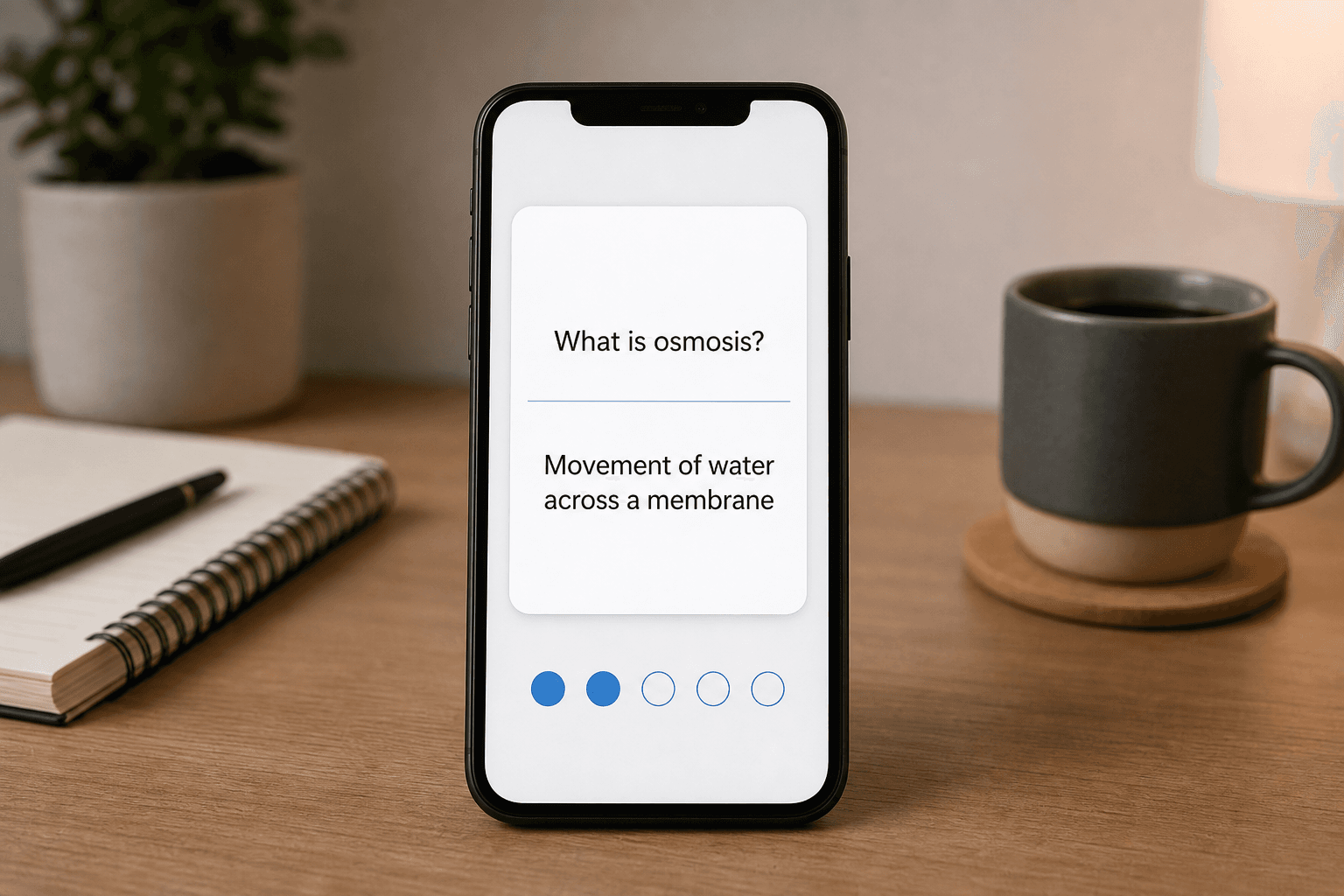
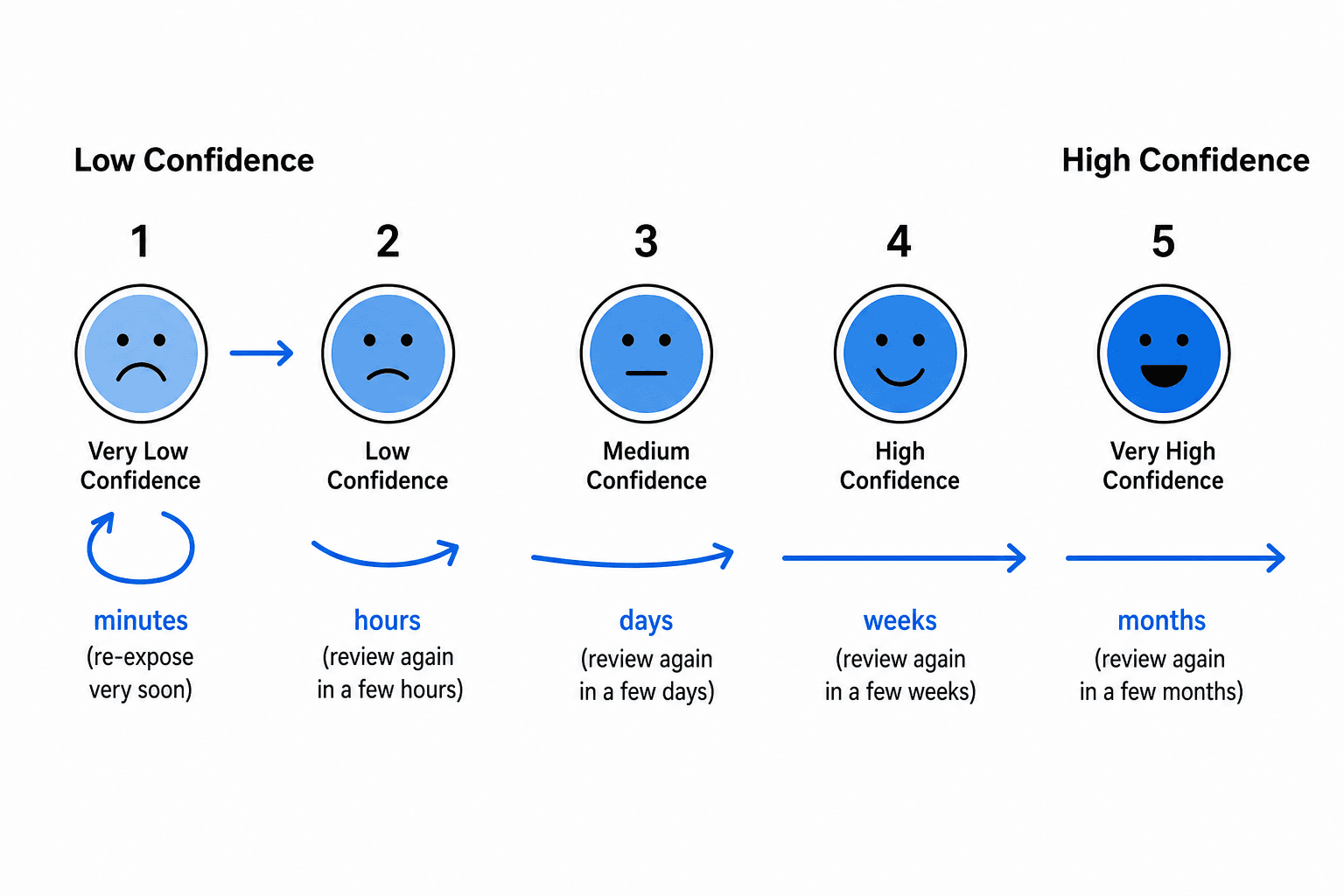
Brainscape is a flashcard app built around a proprietary memory system called Confidence-Based Repetition (CBR). Instead of locking you into a fixed review schedule, it asks you to rate each card on a 1–5 scale after you attempt it, then uses that rating to decide when to show the card again. Rate a card 1 and it comes back in minutes. Rate it 5 and it may not reappear for weeks. The app calls this personalized map of what you know — and what you're still shaky on — your Knowledge Genome.
The app targets students who want the memory science of spaced repetition without the setup friction of Anki. Its clearest differentiator is a marketplace of Certified decks — flashcard sets vetted by subject-matter experts for high-stakes exams like the MCAT, bar exam, and AP courses. Brainscape is available on Web, iOS, and Android, with a free tier that is genuinely useful rather than artificially capped.
| Attribute | Details |
|---|---|
| Tool Category | Flashcard app with spaced repetition |
| Available Platforms | Web, iOS, Android (no native Windows or macOS desktop app) |
| Pricing Model | Freemium |
| Free Tier Available | Yes — unlimited self-created cards, spaced repetition, no ads |
| SRS Algorithm | Proprietary Confidence-Based Repetition (CBR) |
| AI Features | AI flashcard generation via ChatGPT integration (four modes: Import/Paste, Summarize from Content, Tell AI What I Want, Fix with AI) |
| Best For | MCAT preppers, bar exam candidates, AP students, language vocabulary learners, professional certification preppers |
| Last Reviewed | June 2026 |
How Confidence-Based Repetition Works
Every time you study a card in Brainscape, you rate how well you knew it on a scale from 1 to 5. That single number drives everything the algorithm does next. The system is designed to keep cards in your study queue at the moment they are most at risk of being forgotten — not before (wasted effort) and not after (already gone).
According to Brainscape's official algorithm documentation, the approximate review intervals for each confidence rating are:
- Rating 1 — card reappears within a few minutes
- Rating 2 — card reappears in 10 or more minutes
- Rating 3 — card reappears within a few hours
- Rating 4 — card reappears within a few days
- Rating 5 — card reappears in weeks or even months
These intervals are not fixed. The algorithm also factors in how many decks you are studying at once, how recently you studied, and how many cards are sitting in each confidence bucket. Cards that have not been reviewed in a while become "stale" and resurface automatically, even if you previously rated them highly.
CBR vs. SM-2: What the Difference Actually Means
Anki's SM-2 algorithm works on absolute, mathematically calculated intervals. When you rate a card, SM-2 computes a precise next review date — "study this card again in exactly 4 days." CBR works differently. It uses relative scheduling: a card rated 4 will resurface once lower-rated cards in the same deck have cycled through, without locking in a specific future date.
The practical effect is that CBR is more forgiving of irregular study habits. You do not fall behind a rigid schedule if you miss a day. The tradeoff is less mathematical precision — CBR does not guarantee that a card appears at the exact optimal moment the way SM-2 aims to. For most students, this tradeoff is worth it. For students who want maximum retention efficiency and are comfortable with Anki's complexity, SM-2 has the edge.
Key Features in Depth
Certified Decks Marketplace
Brainscape's most distinctive feature is its library of Certified decks — flashcard sets created by subject-matter experts, professors, and credentialed professionals rather than crowdsourced from anonymous contributors. Coverage is strongest for high-stakes exam categories: MCAT, bar exam, AP subjects, language certification exams, and professional licensing tests.
Certified decks are locked behind the Pro tier. Free users can access 2,500 preloaded cards from Brainscape's own library (including Knowledge Rehab, Street Smarts, and Vocab Workout collections) and any decks shared directly with them, but cannot browse or unlock the full Certified marketplace without upgrading.
AI Flashcard Generation
Brainscape offers four AI-powered card creation modes, available on both mobile and web. The AI layer uses ChatGPT as its underlying engine. According to Brainscape's Help Center documentation on AI card creation, the four modes are:
- Import/Paste — paste text directly, upload a file, upload an image, or use your phone's camera to photograph notes or textbook pages.
- Summarize from Content — upload files, images, or paste notes and the AI converts them into flashcards automatically without requiring any prompt.
- Tell AI What I Want — describe a topic in up to approximately 50 characters, set a target card count, and optionally choose a language in Advanced mode. Good for generating cards on a subject without source material.
- Fix with AI — applies ChatGPT to reformat or polish cards you have already imported, cleaning up wording and improving clarity.
Offline Access
Brainscape supports offline studying on Web, iOS, and Android. You can download decks for use without a connection — useful for commuting, flights, or studying in low-signal environments. Offline access applies to both self-created decks and any Certified or shared decks you have downloaded while connected.
Progress Analytics and Study Reminders
Brainscape tracks mastery percentages at the deck and subject level, showing you how your confidence ratings have shifted over time. Study reminders are available on the free tier. Pro users gain access to additional analytics controls, including the ability to reset study statistics — useful when restarting a subject from scratch or sharing a deck with a new learner.
Collaboration and Sharing
Brainscape supports multi-editor shared decks with permission controls — similar in concept to a shared Google Doc. You can invite collaborators to contribute cards, control who can edit versus view, and share decks with study groups or classmates. Shared decks that are sent directly to a free user are accessible without a Pro subscription, which makes Brainscape practical for group study even when not everyone has paid.
Pricing Tiers: What Each Plan Includes
| Plan | Price | What's Included |
|---|---|---|
| Basic (Free) | Free forever | Unlimited self-created flashcards; spaced repetition; 2,500 preloaded cards (Knowledge Rehab, Street Smarts, Vocab Workout); limited AI flashcard generation; study reminders; progress tracking; collaboration and sharing tools; no ads |
| Pro | $7.99/month billed annually | Everything in Basic, plus: unlimited Certified flashcard decks; unlimited community content from other learners; unlimited AI flashcard generation (daily limit applies, amount unpublished); images and audio on cards; reverse flashcards; bookmarked flashcards; advanced privacy controls; study stats reset |
| Enterprise | Custom (bulk discounts up to 70% off Pro) | Everything in Pro, plus: branded private landing page; detailed student study analytics; dedicated support; designed for schools and organizations |
The free tier is genuinely functional, not a crippled trial. Brainscape's own Help Center advises: unless you have a high-stakes exam coming up fast and need immediate access to pre-made Certified decks, starting with the free plan is the right move. The core CBR engine, unlimited card creation, and collaboration tools are all available without paying.
The upgrade to Pro is most justified when you need access to expert-curated Certified decks for a specific exam — particularly MCAT, bar exam, or AP subjects — or when you want to generate large volumes of AI flashcards without hitting the free-tier file size cap.
Best Use Cases: Who Gets the Most Out of Brainscape
Brainscape's strengths align most clearly with students who need to memorize large volumes of discrete facts and who can benefit from pre-built, expert-reviewed decks. The following student profiles get the most out of what Brainscape actually offers:
- MCAT preppers — Certified MCAT decks built by subject experts mean you are not starting from scratch or trusting anonymous crowdsourced content. CBR's low-friction rating system makes daily review sustainable over a long prep timeline.
- Bar exam candidates — the Certified marketplace includes bar prep content vetted by legal professionals, covering the high-volume fact memorization the bar requires.
- AP students — Certified AP decks cover major subjects. For students who want structured review without building their own deck from scratch, this is a meaningful time-saver.
- Language vocabulary learners — vocabulary acquisition is one of the clearest use cases for spaced repetition, and CBR's confidence-rating mechanic is particularly well-suited to it. Rating a word you half-remembered differently from one you knew cold is intuitive and accurate.
- Professional certification preppers — licensing exams in medicine, law, finance, and other fields often require memorizing specific rules, definitions, and formulas. Brainscape's Certified marketplace includes content for several professional certification categories.
- Students who want real SRS without Anki's learning curve — Brainscape requires no configuration. The CBR mechanic is immediately understandable. Students who have tried Anki and found it overwhelming often find Brainscape's interface a workable alternative that still delivers genuine spaced repetition.
The common thread across these use cases is discrete-fact memorization at volume. Brainscape is less effective for subjects that require building conceptual frameworks, working through problems, or understanding causal relationships — those learning goals are better served by active problem-solving and retrieval practice in longer formats.
Notable Limitations and Honest Caveats
Brainscape is a strong tool for its target use case, but evaluation-stage students should know these limitations before committing:
- No native desktop app. Desktop access is browser-only. There is no downloadable Windows or macOS application. If you prefer a dedicated desktop experience over a browser tab, this is a real gap.
- CBR is less mathematically precise than SM-2. There is no hard "next review in X days" date. Scheduling is relative and adaptive, not absolute. Students accustomed to Anki's precision may find this less satisfying.
- No FSRS support. Brainscape uses CBR exclusively. If you want to use FSRS — currently the most research-supported spaced repetition algorithm — Anki is the better choice.
- AI generation daily limits exist on Pro, but are not published. Brainscape describes the Pro daily limit as "quite high" without specifying a number. Free users face a more restrictive file-size cap. Neither limit is precisely quantified in public documentation.
- Free tier cannot access the full community or Certified deck library. The 2,500 preloaded free cards are general-interest content, not exam-prep Certified decks. Unlocking the Certified marketplace requires Pro.
- Flashcards suit discrete facts better than conceptual understanding. Brainscape works best for vocabulary, definitions, formulas, and rules. If your exam requires synthesizing information, applying concepts, or writing extended analysis, flashcards alone are not sufficient — and Brainscape does not offer supplementary learning modes beyond card review.
How Brainscape Compares: Brief Alternatives Overview
Brainscape is not the right tool for every student. Here is a concise look at the three most common alternatives, matched to the situations where each has a clear edge:
| Tool | Algorithm | Day-14 Retention (Independent Test) | Free Desktop App | Best When |
|---|---|---|---|---|
| Brainscape | Proprietary CBR | 82% | No (browser only) | You want expert Certified decks, low setup friction, and CBR's flexible scheduling |
| Anki | SM-2 | 89% | Yes (Windows, macOS, Linux) | You want maximum algorithm control, free desktop use, and are comfortable building your own decks |
| Quizlet | Basic adaptive (weaker SRS) | 74% | No (browser only) | You want a massive pre-made content library, social features, or casual study without strict SRS |
| RemNote | SM-2 variant | 83% | Yes (desktop app available) | You want note-taking and spaced repetition in a single integrated app |
Anki's advantage is clear if you need maximum precision and are willing to invest time in configuration and card creation. Quizlet's advantage is content volume and social features, not SRS quality. RemNote suits students who want their notes and flashcards in one place. None of these tools offer Brainscape's combination of expert Certified decks and immediate usability.
Verdict: Choose Brainscape If — Skip It If
Choose Brainscape if:
- You want real spaced repetition without Anki's configuration overhead and manual card-building requirement.
- You are preparing for the MCAT, bar exam, AP exams, or a professional certification and want access to expert-vetted Certified decks rather than building from scratch.
- You study primarily on mobile and want a polished, low-friction app experience with offline access.
- You want AI flashcard generation with multiple input modes (text, file, image, camera) and a simple prompt-based option.
- You are learning vocabulary in a foreign language and want a confidence-rating system that naturally adapts to what you half-know versus what you know cold.
- You are starting out and want the Help Center's own advice: begin with free, upgrade only when you need Certified decks or unlimited AI.
Skip Brainscape if:
- You need a native desktop application for Windows or macOS — Brainscape is browser-only on desktop.
- You want rigorous interval scheduling precision (SM-2 or FSRS) with hard next-review dates and a mathematically calculated ease factor.
- You are on a tight budget, comfortable building your own decks, and willing to invest time learning Anki — Anki is free with a stronger algorithm.
- Your primary learning goal is conceptual understanding or applied problem-solving rather than discrete-fact memorization — flashcards alone will not cover that ground.
- You need to generate very large volumes of AI flashcards reliably and cannot work within an unpublished daily limit.
Comments
Join the discussion with an anonymous comment.